
Le texte français vient bientôt.
Featured image by Adam Collingwood
Hello everyone,
As winter settles in and snow begins (or continues!) to fall across the country, we hope you are finding moments of warmth and joy in this December stretch. With the final weeks of 2025 upon us, we are beginning to reflect on some of the big successes throughout the year, and the increasing examples of KBAs appearing in planning and decision-making.
KBAs featured in the State of Nova Scotia’s biodiversity report
The government of Nova Scotia recently published several modules of their State of Biodiversity report (https://storymaps.arcgis.com/collections/6b0e65ee9a984cd18548517a8b78a09f?item=1), which is part of the public reporting required under their provincial Biodiversity Act. The report compiles information on the status of species and ecosystems, sustainable wildlife use, wildlife health, and pressures on biodiversity. KBAs are featured within this report, highlighted as a tool to support and inform biodiversity conservation in the province, alongside other approaches such as increasing parks and protected areas and Species-At-Risk policy renewal.
Winnipeg KBA applauded by city’s mayor
A recent press release from WCS Canada’s KBA team highlights the Living Prairie Museum KBA, a remnant patch of tallgrass prairie within the City of Winnipeg that is home to two rare species that meet KBA criteria: Downy Gentian, a rare plant with only one other known population in Canada, and Whitney’s Underwing, a moth that has only previously been seen in Canada in the 1910s. From Scott Gillingham, Mayor of Winnipeg: “This designation as a Key Biodiversity Area is national recognition of the importance of the work being done here by our staff, our partners, and the volunteers who care for this land.” Living Prairie Museum Curator, Marika Olynyk (who collaborated on the KBA proposal), said in a CTV News interview that the KBA is a great recognition for the museum and speaks to the efficacy of their management of the site.
3rd annual KBA Canada Photo Contest crowns a Grand Prize winner
The 3rd annual KBA Canada Photo Contest came to a close this fall, crowning Jérémy Mathieu’s “Herring Spawn” image as the Grand Prize winner. This year’s contest was a huge success, with more submissions than the last two years combined (450 in total!) from over 120 amateur and professional photographers from every province and territory in Canada. See the winning images in each competition category and a list of honorable mentions on the KBA Canada website.
Updates from the EBAR team:
NatureServe Canada’s Ecosystem-based automated range map (EBAR) project is scheduled to conclude in March 2026 due to funding constraints. As they enter into the last expert review phase, they are currently looking for experts to help refine remaining priority range maps. If you, or anyone you know would like to participate as an expert reviewer, please fill in this SURVEY. We thank all expert reviewers and data providers for contributing to this national project!
KBA of the Month – Quttinirpaaq National Park – Tanquary Fiord KBA
High in the Arctic, on Ellesmere Island in Nunavut and just a short reach from the North Pole, lies Quttinirpaaq National Park — aptly named “land at the top of the world.” Within this remote wilderness, the Quttinirpaaq National Park – Tanquary Fiord Key Biodiversity Area (KBA) showcases a rugged landscape of steep gully walls, with numerous small cliffs, and waterfalls. The moist, shaded calcareous substrates of this site are home to significant populations of Porsild’s Bryum (Haplodontium macrocarpum), a Threatened species found in few other places in Canada. Additional biodiversity of note in the area include Arctic Hare (Lepus arcticus), Peary Caribou (Rangifer tarandus pearyi), Muskox (Ovibos moschatus), and Arctic Fox (Vulpes lagopus).
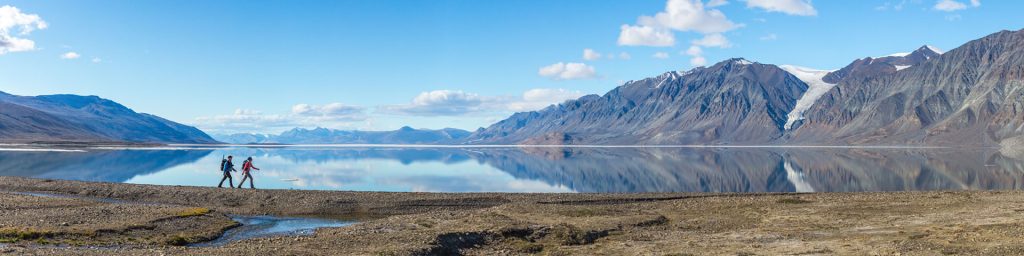
Photo by Ryan Bray, Parks Canada
Species of the Month – Polar Bear (Ursus maritimus)

Photo by Adam Collingwood
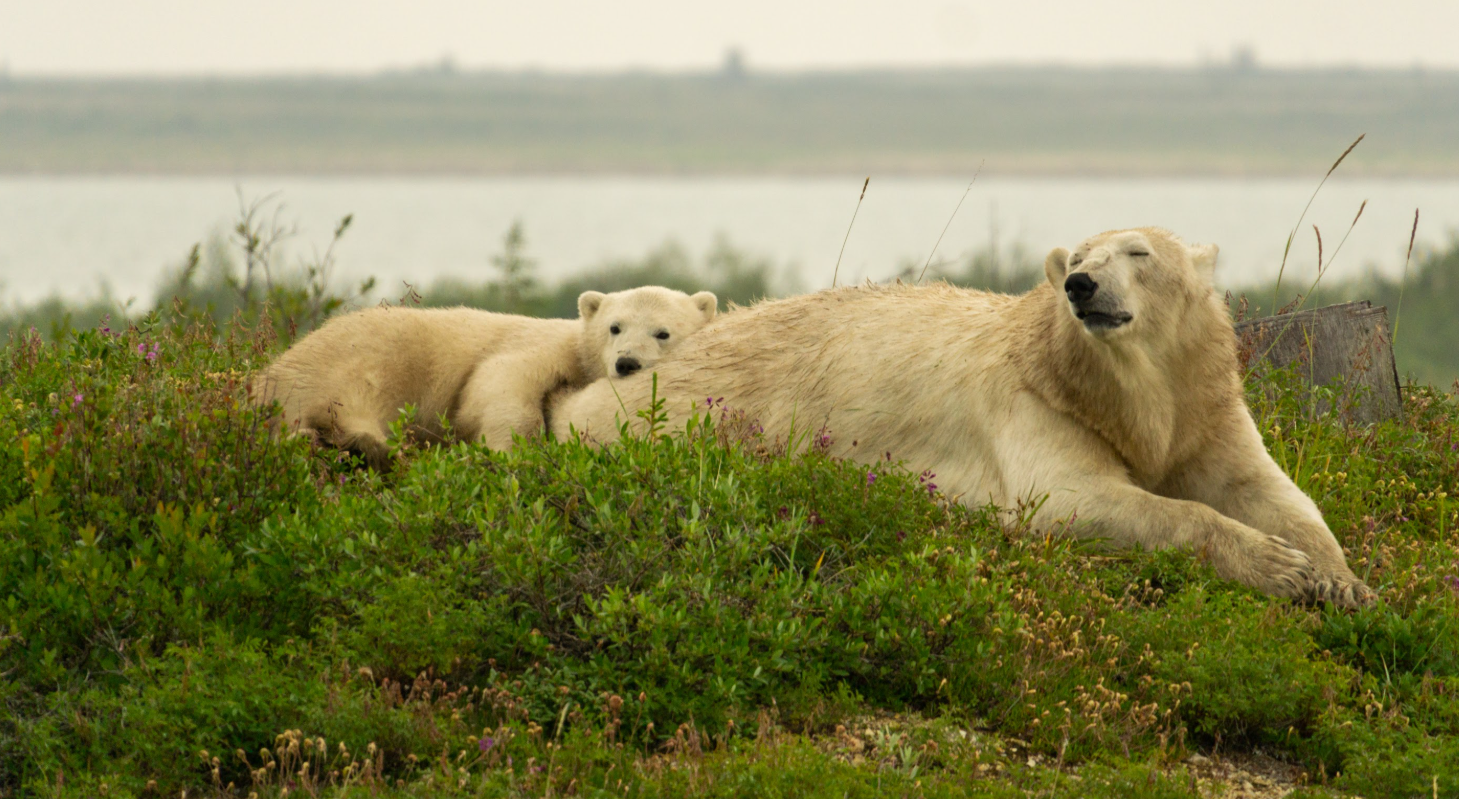
Polar bears (Ursus maritimus) are the world’s largest living bear and land carnivore! These iconic Arctic marine mammals are uniquely adapted to life on sea ice, where their powerful paws and specialized hunting skills allow them to prey on seals. With global populations estimated at 22,000–31,000 and sea ice rapidly declining, protecting their critical habitats is essential to safeguarding this vulnerable species. Typically solitary, Canada has several sites, including Churchill candidate KBA, where polar bears will aggregate in relatively high densities that meet KBA criteria as they wait for sea-ice to form in the fall.
For more information about this species visit iNaturalist!
The following new KBAs were added to the Registry over the past three months:
• Îles-de-la-Madeleine – Havre-aux-Basques (Quebec): https://kbacanada.org/site/?SiteCode=QC164
• Îles-de-la-Madeleine – Pointe de l’Est (Quebec): https://kbacanada.org/site/?SiteCode=QC009
• Squamish River (British Columbia): https://kbacanada.org/site/?SiteCode=BC023
• Point Pelee and Hillman Marsh (Ontario): https://kbacanada.org/site/?SiteCode=ON006
• Baie des Loups (Quebec): https://kbacanada.org/site/?SiteCode=QC069
• Bass River (New Brunswick): https://kbacanada.org/site/?SiteCode=NB061
• Blow Me Down Mountain (Newfoundland and Labrador): https://kbacanada.org/site/?SiteCode=NL101
• Carron Point (New Brunswick): https://kbacanada.org/site/?SiteCode=NB062
• Daly Point (New Brunswick): https://kbacanada.org/site/?SiteCode=NB063
• Eaux entourant l?île Patte de Lièvre (Quebec): https://kbacanada.org/site/?SiteCode=QC151
• Grand Falls (New Brunswick): https://kbacanada.org/site/?SiteCode=NB064
• Lake of the Woods Sand Spit Archipelago (Ontario): https://kbacanada.org/site/?SiteCode=ON144
• Lewis Hills (Newfoundland and Labrador): https://kbacanada.org/site/?SiteCode=NL102
• Magaguadavic River (New Brunswick): https://kbacanada.org/site/?SiteCode=NB065
• Maitland River (Ontario): https://kbacanada.org/site/?SiteCode=ON212
• Manitoulin Island South Shore (Ontario): https://kbacanada.org/site/?SiteCode=ON203
• Medford (New Brunswick): https://kbacanada.org/site/?SiteCode=NB066
• Mont Sainte-Anne (Quebec): https://kbacanada.org/site/?SiteCode=QC177
• Napu’saqnuk – St. Mary’s River (Nova Scotia): https://kbacanada.org/site/?SiteCode=NS101
• Niagara River Corridor (Ontario): https://kbacanada.org/site/?SiteCode=ON002
• Norfolk Forest Complex (Ontario): https://kbacanada.org/site/?SiteCode=ON009
• North Arm Mountain (Newfoundland and Labrador): https://kbacanada.org/site/?SiteCode=NL103
• Oak Lake – Plum Lakes Area (Manitoba): https://kbacanada.org/site/?SiteCode=MB011
• Oak Lake – Souris Sandhills (Manitoba): https://kbacanada.org/site/?SiteCode=MB136
• Pelee Island Natural Areas (Ontario): https://kbacanada.org/site/?SiteCode=ON013
• Petitcodiac River (New Brunswick): https://kbacanada.org/site/?SiteCode=NB068
• Rocher Logan (Quebec): https://kbacanada.org/site/?SiteCode=QC179
• Sept-Îles (Quebec): https://kbacanada.org/site/?SiteCode=QC162
• Val-Comeau (New Brunswick): https://kbacanada.org/site/?SiteCode=NB070
• Îles Sainte-Marie (Quebec): https://kbacanada.org/site/?SiteCode=QC065
• Îles-de-la-Madeleine – Dune du Nord (Quebec): https://kbacanada.org/site/?SiteCode=QC178
• Akpait and Qaqulluit (Nunavut): https://kbacanada.org/site/?SiteCode=NU107
• Beaverhill Lake (Alberta): https://kbacanada.org/site/?SiteCode=AB001
• Hell Gate Polynya (Nunavut): https://kbacanada.org/site/?SiteCode=NU103
• Mussel and Kynoch Inlets (British Columbia): https://kbacanada.org/site/?SiteCode=BC110
• Penny Strait Polynya (Nunavut): https://kbacanada.org/site/?SiteCode=NU104
• Rochers aux Oiseaux (Quebec): https://kbacanada.org/site/?SiteCode=QC006
• Scatarie Island (Nova Scotia): https://kbacanada.org/site/?SiteCode=NS052
• White Islets-Chapman and Wilson Estuaries (British Columbia): https://kbacanada.org/site/?SiteCode=BC025

