By Rielle Hoeg and Sue Abbott, Birds Canada
Shorebird populations are in trouble and need our help. According to the 2024 State of Canada’s Birds Report, shorebird populations declined in Canada by 42% since 1980. The report identifies top actions needed to conserve shorebirds, including giving shorebirds space to feed and rest. KBAs are important sites where we can target conservation actions for shorebirds. At shorebird-designated KBAs in Nova Scotia, Birds Canada’s Space to Roost program uses stewardship strategies to ensure shorebird flocks have safe and calm spaces for resting during peak fall migration in late summer.
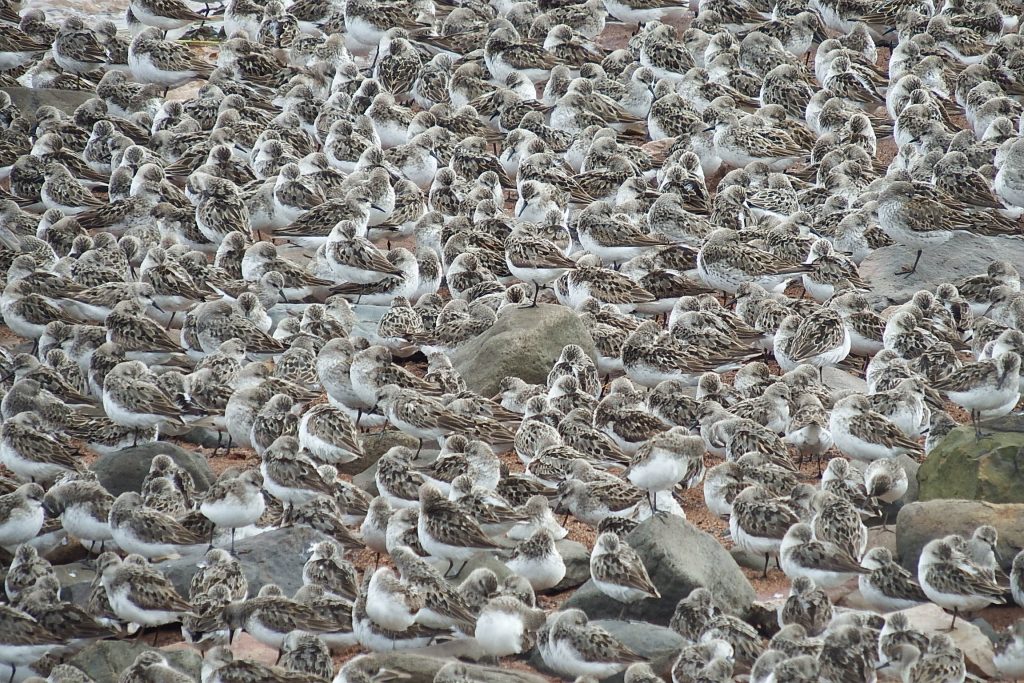
Since 2017, Space to Roost has focused on reducing human-caused disturbances at stopover sites for Semipalmated Sandpipers in the inner the Bay of Fundy of Nova Scotia. The Southern Bight, Minas Basin KBA is globally significant for Semipalmated Sandpipers, supporting tens of thousands of these sparrow-sized shorebirds during peak migration in August. “Semis” migrate along the Atlantic Flyway from their Arctic breeding grounds all the way to South America to spend the winter. The Bay of Fundy is their last pit-stop before a continuous, three-day flight over the Atlantic Ocean. They must double their body weight to have enough energy to survive, which requires ample food and rest. Starting about two hours before peak high tide, thousands of “Semis” and other shorebirds gather in dense flocks to rest on coastal beaches in the KBA. Shorebird rest time ends about four hours later – when the tide recedes and exposes mudflat foraging habitats again. To ensure these migratory superheroes have safe and calm spaces for resting, Space to Roost asks beach users to avoid a section of beach, called the “shorebird resting beach”, during August rest times.
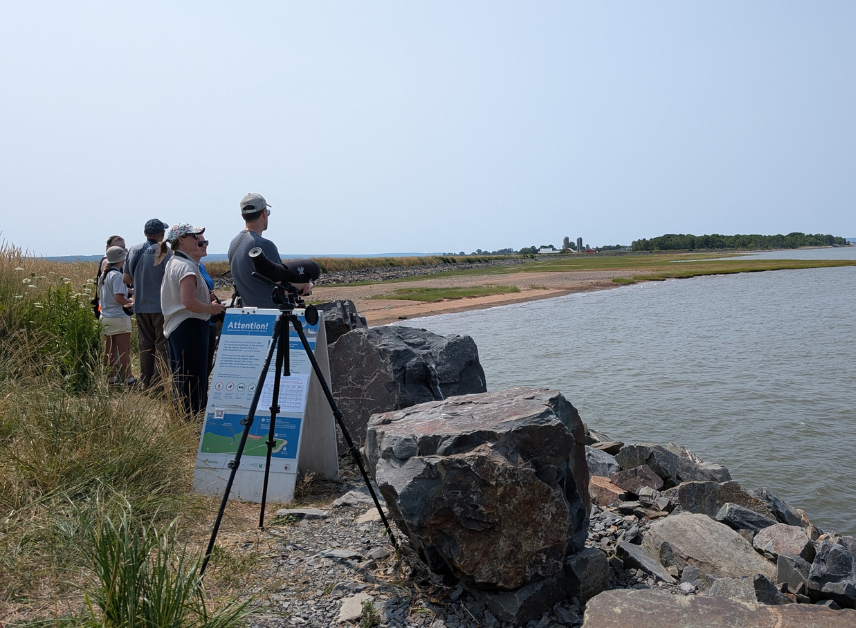
Given Space to Roost’s success reducing disturbance at two target sites in the Southern Bight, Minas Basin KBA, in 2025 we piloted Space to Roost at the Musquodoboit KBA – a globally significant site for migrating Semipalmated Plovers. For six days during peak migration in August, we tested the same shared-space approach with a voluntary closure of a section of Martinique Beach Provincial Park where Semipalmated Plovers rest during high tide. We engaged with beachgoers to share information about shorebirds, gauge their willingness to avoid the shorebird resting beach during rest times in August, and gather input on best ways to communicate shorebird rest times to locals and tourists alike. We spoke to 156 beachgoers and were encouraged by what we heard. People were interested and supportive of sharing space with shorebirds and 94% expressed willingness to avoid the shorebird resting beach during rest times. Overall, there were very few negative interactions and these were mostly related to frustration over province-wide restrictions on entering forested areas due to wildfires at the time. Space to Roost is just one way that Birds Canada is working to conserve shorebird populations through on-the-ground actions, and we are excited about a future where shared-space solutions are used to improve conditions at key stopover sites and a culture of shorebird stewardship thrives at KBAs.